
Edge Sites
Pantheon is a platform for managing Drupal and WordPress websites. It helps companies, agencies, and developers handle multiple sites from one dashboard. It offers version control, staging environments, backups, and workflow tools.
Edge Sites is Pantheon’s push-button static-site product, enabling teams to ship performant, secure, and easily managed web properties without the overhead of traditional infrastructure.
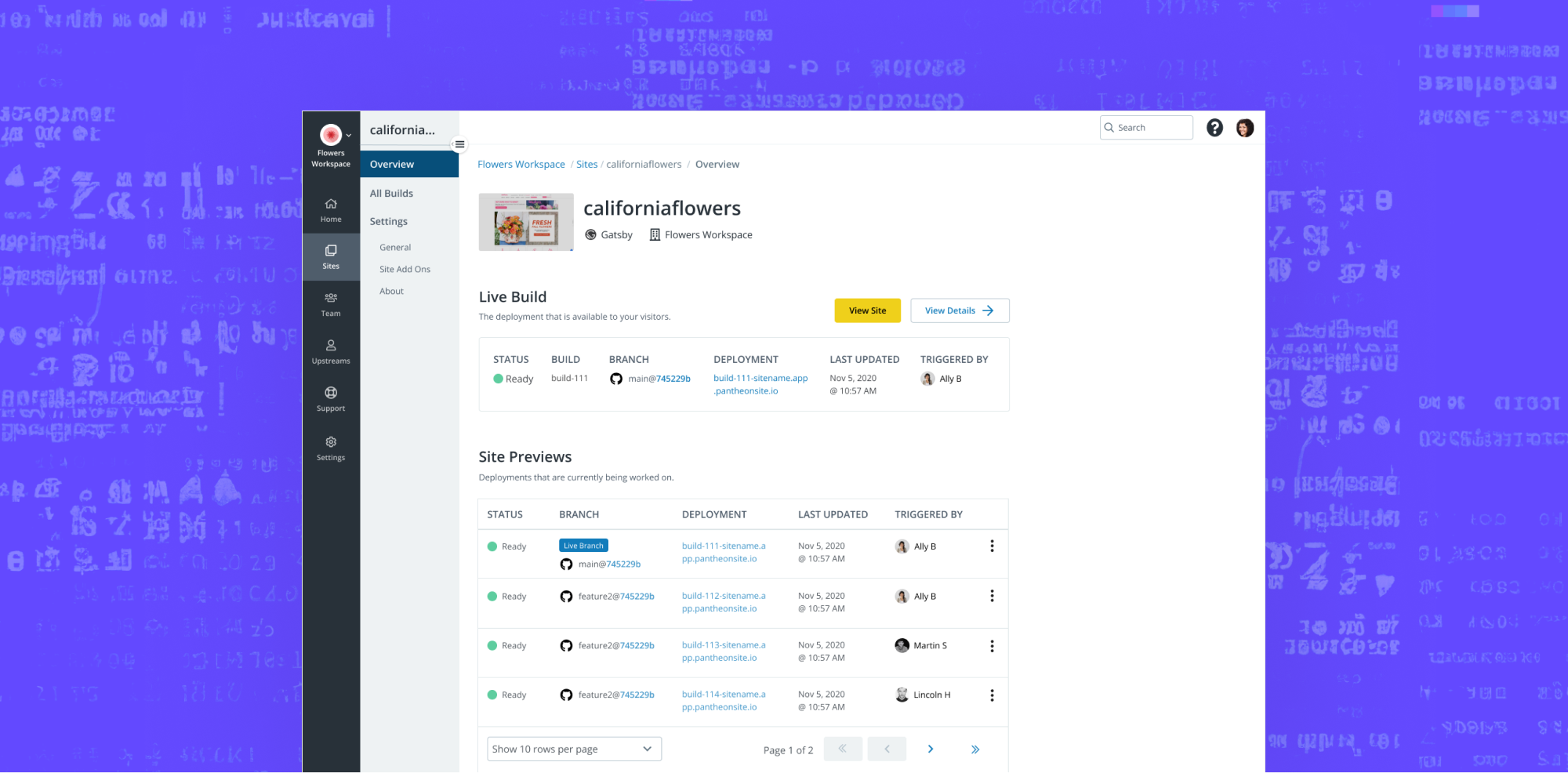
TL;DR / Design Work
- Prototyped the Git-connected site creation flow.
- Designed build status, log, and Lighthouse reporting views.
- Design to further research, plan, and design other parts of the Edge Sites experience.
Context
Pantheon needed a way to support faster, more modern static-site workflows without breaking the reliability, governance, and deployment expectations of its enterprise web platform. Developers wanted speed and flexibility. Platform teams needed consistency, reliability, and confidence that new workflows could scale.
Who the users were
- Frontend developers and web engineers building static and headless sites
- Web teams and agency partners managing client sites on Pantheon
- Platform admins and WebOps teams responsible for environments and release confidence
- Enterprise site teams balancing marketing velocity with operational control
What problem they had
Pantheon's Drupal and WordPress workflows served a large customer base, but teams exploring static and headless approaches still relied on ad-hoc setup, manual configuration, or engineering help for each new project. They needed Git-connected builds and faster iteration without abandoning Pantheon's environment model and deployment standards.
Why it mattered to Pantheon's product strategy
Edge Sites was a way to expand Pantheon beyond traditional CMS hosting into modern front-end workflows while keeping the platform's core promise of reliability and governance. A credible static-site path could help WebOps teams support headless and JAMstack use cases without fragmenting the Pantheon experience enterprise customers expected.

Business Problem
The design challenge was making a faster workflow feel native to Pantheon without introducing new risk for the teams responsible for keeping sites reliable at scale:
- Ship consistently across environments
- Maintain reliability and governance at scale
- Let web teams move quickly without bypassing platform controls
Solution Overview
The delivery package gave stakeholders a clear view of the first release experience and everything needed to launch Edge Sites with confidence.
Design Sprint
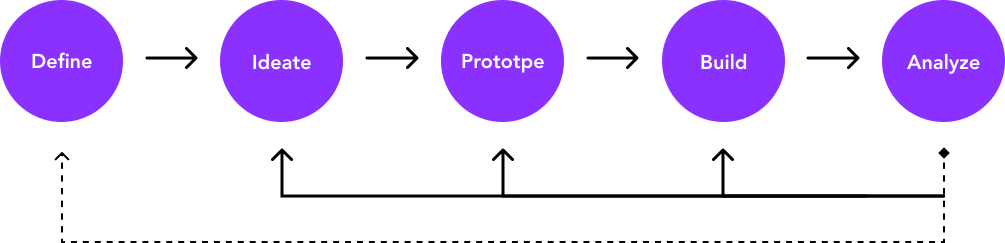
To create a prototype of a developer-focused static site solution with code that can be user-tested at the end of the sprint.
Engineering Goal
It is essential to have a perspective when it comes to coding and technology.
Design Goal
Our hypothesis will be validated through a UX prototype encompassing the entire Pantheon experience, both on and off.
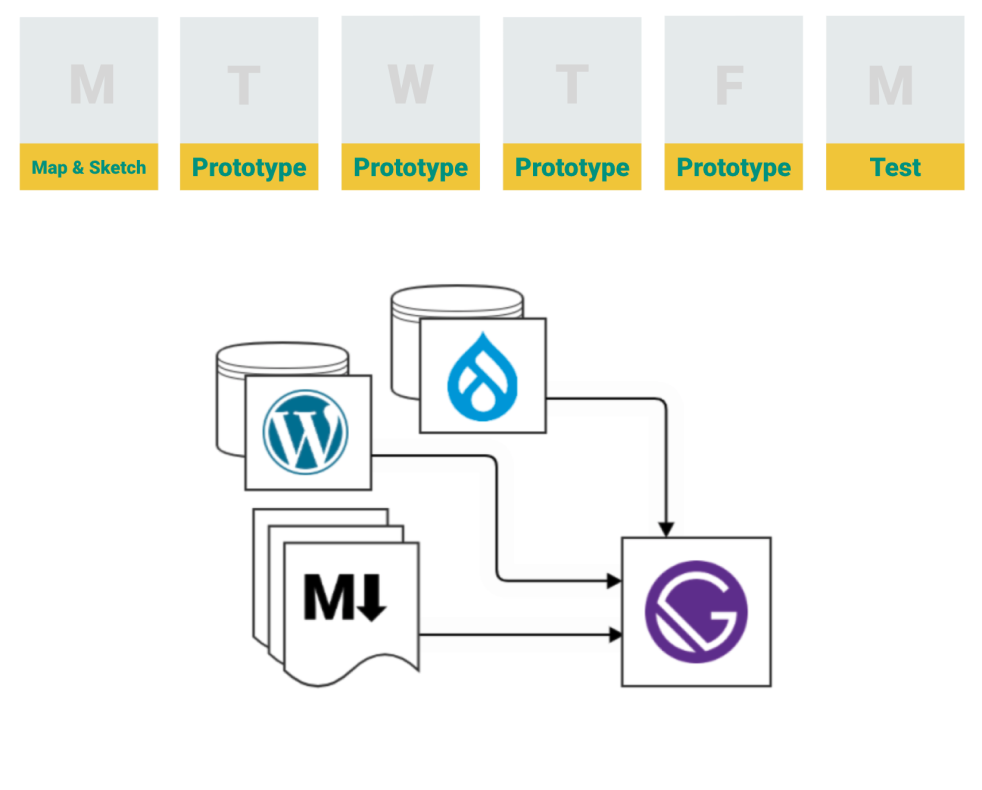
Prototype Work
- Prototyped the Git-connected site creation flow.
- Designed build status, log, and Lighthouse reporting views.

Technical Flows & Architecture
Collaborated with engineering to validate infrastructure diagrams, deployment sequences, and Git integration patterns.

The Product
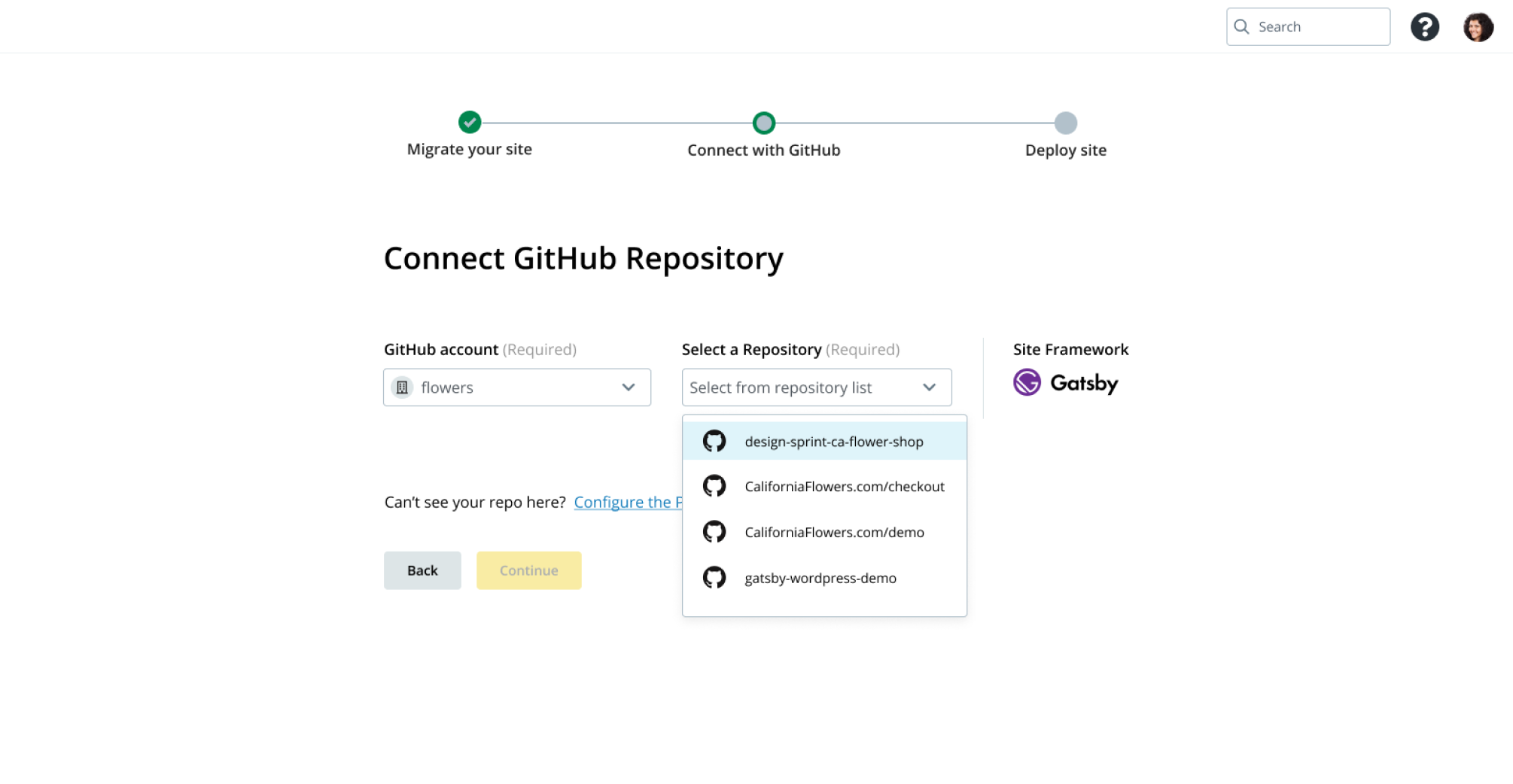
Connect with GitHub
Teams can authenticate with GitHub, choose their repository, and keep existing workflows while deploying to Edge Sites. The flow includes repository selection and build configuration.
Site Overview
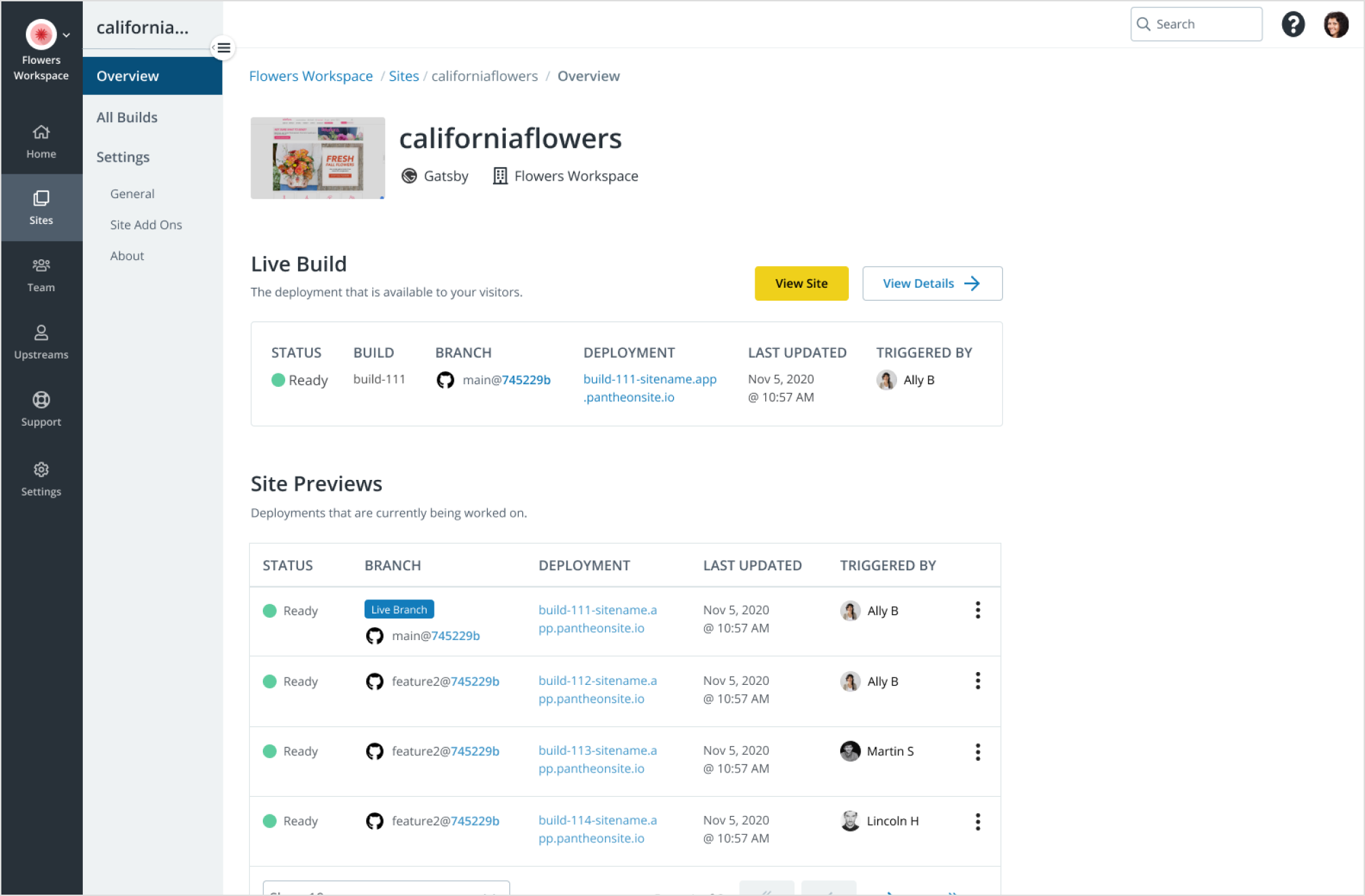
Once connected, teams can monitor live builds, review branch deployments, and keep stakeholders aligned from a single dashboard that reflects the entire workspace status.
Build Details
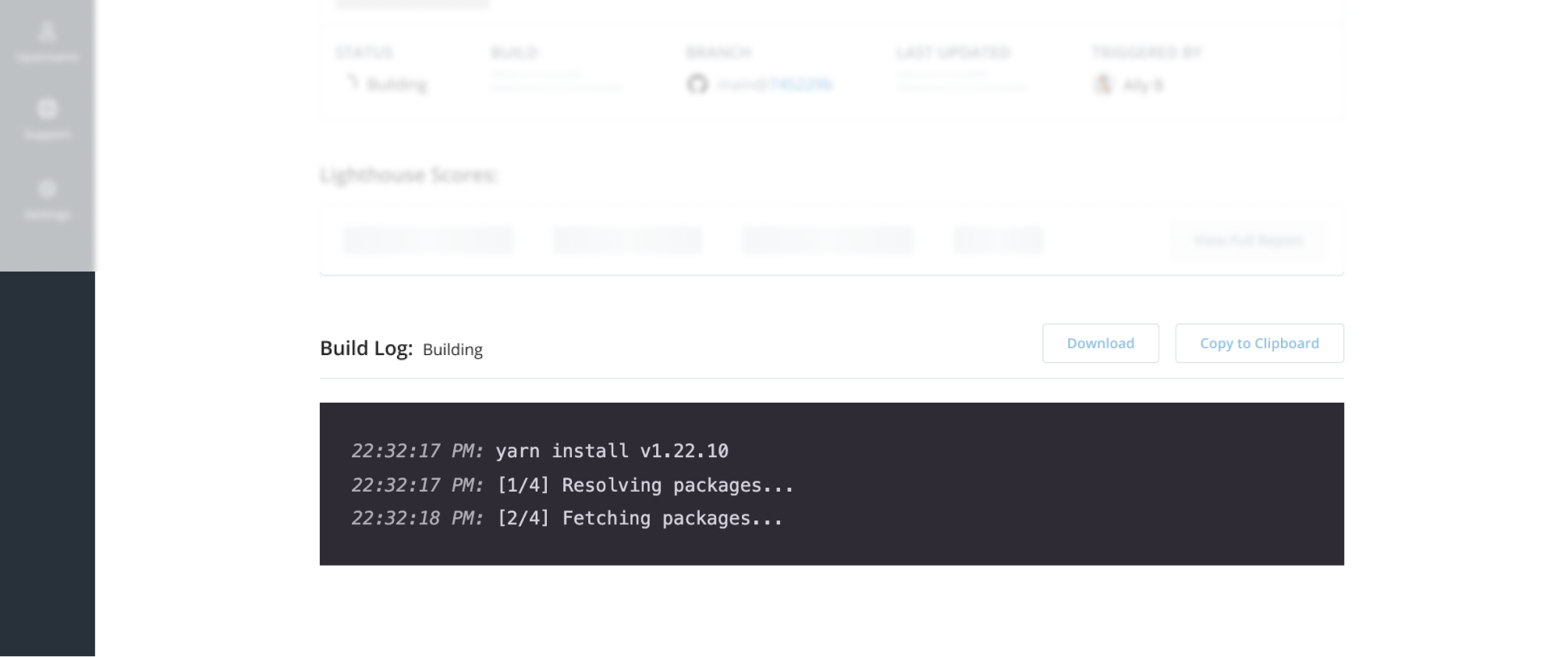
The build details view includes logs, status indicators, and an option to retry failed builds.

Real-time Build Logs
Streaming logs surface each step of the pipeline as it happens, allowing teams to monitor progress, download logs, or copy snippets when investigating failures.
Lighthouse Scores
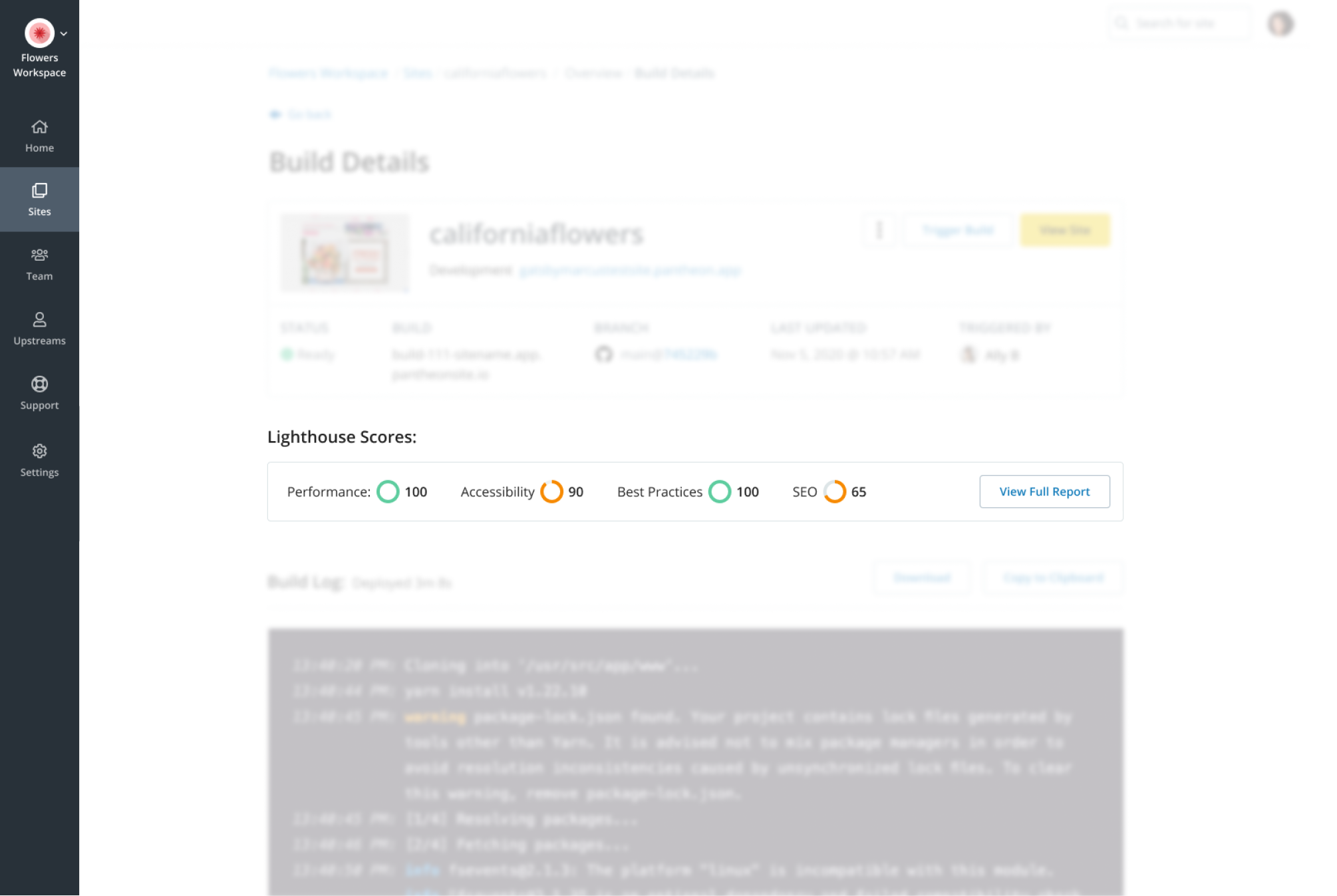
The reporting view presents Lighthouse scores for performance, accessibility, best practices, and SEO.
What We Learned
What we learned
- Developers valued setup speed, but only if deployment behavior was predictable.
- Platform teams needed visibility, governance, and confidence that the workflow could scale.
- The concept needed to feel integrated into Pantheon's existing platform model, not like a separate tool.
How this shaped the product direction
- Prioritized setup clarity over advanced configuration.
- Focused the prototype around deployment confidence and workflow predictability.
- Reduced unnecessary decision points in the early experience.
Ongoing Research
Competitive Teardowns
Document key insights, surprising differentiators, and opportunities surfaced from each competitor review so the team can quickly reference learnings when shaping the roadmap.

Story Mapping
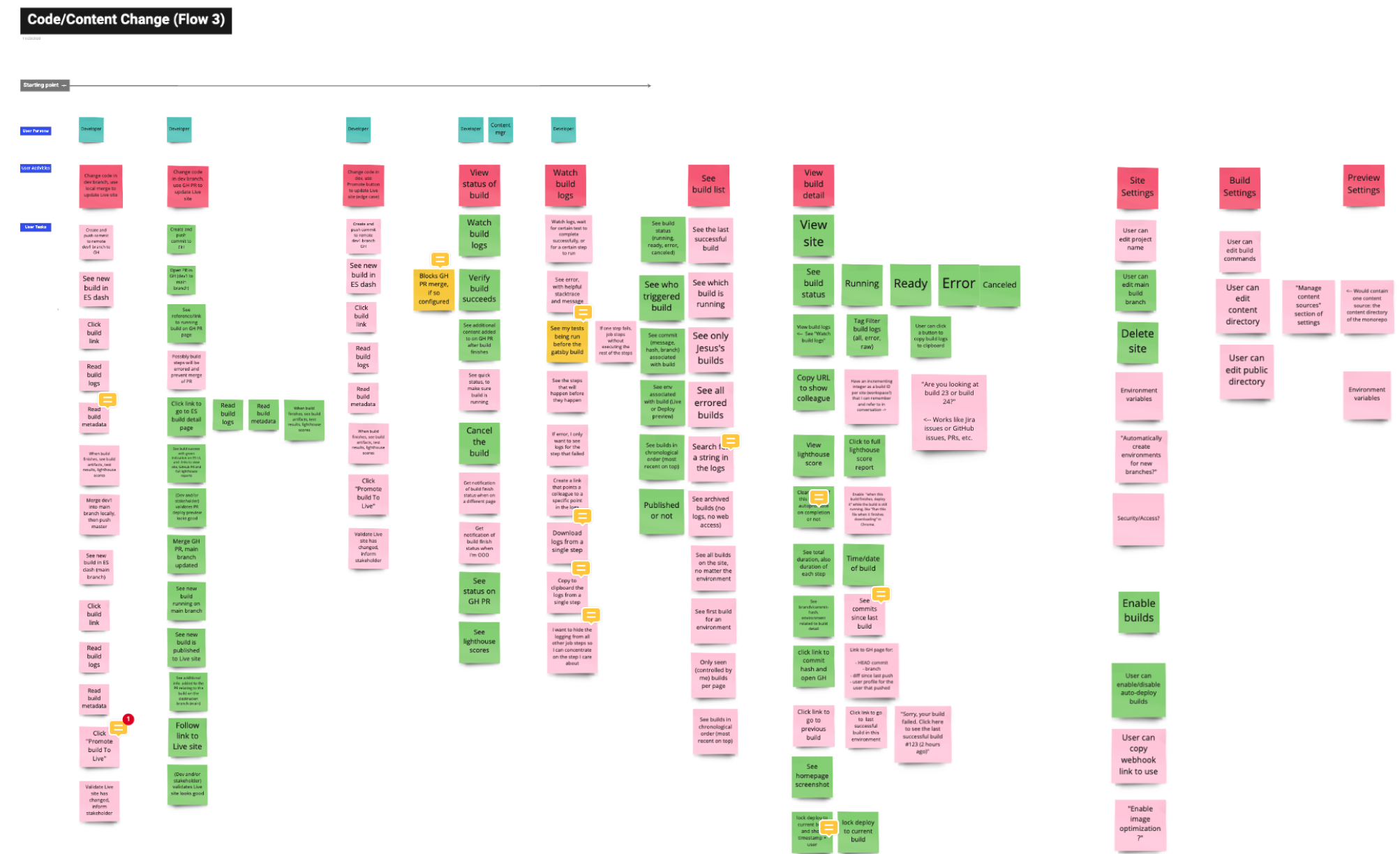
Visualize the prioritized user journeys, handoffs, and supporting work needed to deliver the end-to-end Edge Sites experience.
What's next

Credits
- Product management, engineering, research, and customer success partners at Pantheon.